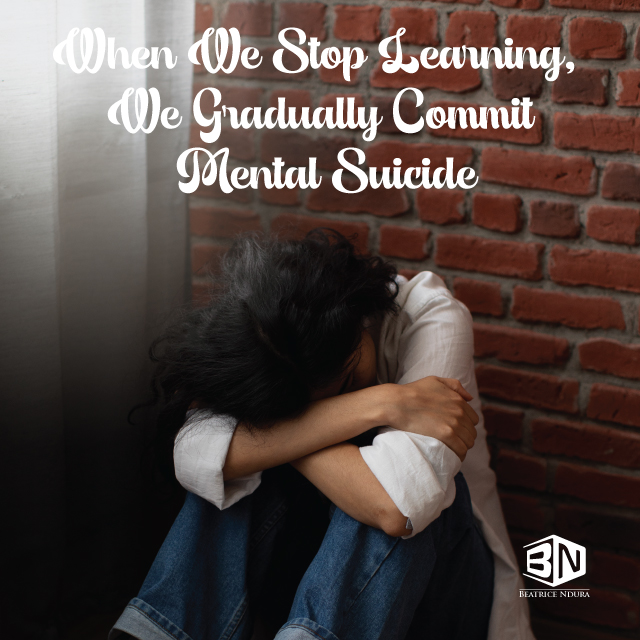
In an era characterized by rapid change and constant innovation, the importance of lifelong learning cannot be overstated. Yet, many individuals and professionals succumb to complacency, believing that their existing skills are sufficient to navigate the complexities of today’s world. The consequences of this stagnation can be dire, leading not only to diminished career prospects but also to a gradual decline in mental agility and fulfillment.
The Perils of Stagnation
To stop learning is, in a sense, to stop living intellectually. Without a commitment to growth and development, we risk becoming obsolete in our fields, trapped in a cycle of outdated knowledge and skills that no longer serve us. As industries evolve—often at an unprecedented pace—those who do not actively engage in learning become sidelined, both professionally and personally. This stagnation may lead to feelings of inadequacy and a diminished sense of purpose, ultimately equating to a form of mental suicide.
The Psychological Impact
Psychologically, the effects of ceasing to learn can be profound. Studies have shown that continuous learning stimulates cognitive processes and can even slow the onset of dementia and other age-related cognitive decline. Conversely, the absence of mental stimulation can lead to increased anxiety, depression, and a sense of purposelessness. When we engage with new ideas, tackle challenging concepts, or learn new skills, we reinforce neural pathways and promote a healthy, active mind. Failure to do so places us at risk of mental atrophy.
Professional Repercussions
In the professional realm, the consequences of stagnation are particularly pronounced. Industries are continually reshaped by technological advancements and evolving market demands. Those who fail to adapt and expand their knowledge base may find themselves outpaced by competitors who have embraced continuous learning. As job markets innovate, new roles emerge that often require skill sets that are foreign to those who have not committed to ongoing education. This not only undermines career progression but can lead to job insecurity and the anxiety that comes with it.
Embracing Lifelong Learning
The antidote to this cycle of stagnation lies in adopting a mindset of lifelong learning. This can take many forms—professional development courses, workshops, reading, mentorship, or simply engaging in conversations that challenge our perspectives. By cultivating curiosity and embracing new learning opportunities, we not only enhance our skills but also our resilience in the face of change.
Engaging with diverse viewpoints, skills, and knowledge not only fosters creativity but also opens the door to innovation. In a world that rewards adaptability, a commitment to learning becomes not just a personal benefit but a professional imperative.
Conclusion
In conclusion, to cease learning is to risk a gradual decline into mental mediocrity and professional irrelevance. Embracing a lifelong learning philosophy is not merely a personal choice; it is an essential strategy for thriving in an ever-evolving landscape. By making the conscious decision to continually learn and grow, we affirm not only our professional relevance but also our mental vitality. Learning is a journey, and the moment we stop is the moment we begin to fade away.
Beatrice Ndura is a dedicated Mental Health Coach, insightful blogger, and the voice behind the Musings Podcast. She inspires individuals to cultivate their mental and spiritual health!
“The images used in this article are AI-generated, created using advanced algorithms to visually represent the content.”